Anyone can ship seed.
But not everyone can support a high-stakes project, keep up with your timeline, and deliver what actually grows.
You need a native seed vendor that knows their stuff.
Not All Native Seed Vendors Are Built for the Field

The wrong vendor costs you time, money, and credibility — especially when you’re managing multiple specs, multiple sites, and multiple stakeholders.
That’s why experienced project managers ask a different set of questions. And it’s why we built Bamert Seed to be more than a supplier. We’re a project partner.
Here’s what to look for when choosing a native seed vendor.
1. Do They Understand Regional Adaptation?
A vendor might sell native seed — but is it adapted to your site?
Seeds sourced 300 miles away (even if they’re the right species) may not perform in your climate, soil, or rainfall zone. A good vendor won’t just match the spec — they’ll make sure it works where you’re planting.
What to look for:
- Clear understanding of your site’s location and conditions
- Willingness to revise specs for ecological success
- Proven-adapted varieties — not just generic species names
✅ Bamert’s Approach: Details Matter
We use trusted sources like USDA Soil Surveys and NRCS plant guides to match each project to the right seed. Our production fields grow over 115 species and varieties adapted to the Southern Great Plains and beyond.
2. Can They Turn Around Blends Quickly and Accurately?
Fast shipping matters.
So does getting the spec right the first time.
Whether your deadline is driven by weather, inspection, or workflow, your vendor should be able to build, tag, and ship a compliant blend without dragging out the process.
What to ask:
- “How fast can you build and ship a blend?”
- “Who creates the blend — a rep, or someone with ecological expertise?”
- “How do you ensure it meets the spec?”
✅ Bamert’s Advantage: Fast and Exact

We ship most in-stock orders next-day across Texas, New Mexico, and Oklahoma — even truckload quantities. Our blends are built by ecologists and tested by a third party for germination, purity, and compliance before they leave the facility.
3. Do They Help You Build (or Check) Your Native Seed Spec?
Plenty of buyers get handed a spec that doesn’t fit the project. Others are writing one from scratch and need help.
The right vendor makes your job easier — by identifying issues early and helping you hit both the ecological goals and agency requirements.
Signs of a great vendor:
- Asks smart questions about the site and goals
- Brings up red flags in the spec (e.g. poor fit for the region, missing info)
- Offers tools or expert input to simplify the process
✅ Try This Free Tool
Use the Seed-Spec Tool to build a baseline spec. Or send us your project, goals, and location — our team will build one for you.
4. Are You Talking to Salespeople — or Subject Matter Experts?
You shouldn’t have to educate your vendor.
The right seed partner understands your world — and the science behind every decision.
Ask who you’re really working with. Do they have experience with DOT specs? Do they know the difference between bulk seed and PLS? Can they explain why a blend works (or doesn’t) for a particular site?
✅ Bamert’s Team: On Paper and in the Field
Our Reclamation Specialists have advanced degrees in agriculture, wildlife management, agronomy, and ecology — and experience on real project sites. We don’t just take orders. We ask better questions so your blend succeeds in the field, not just on paper.
5. Native Seed Vendors: Will They Flag What You Might Miss?
When specs are recycled or pulled from past jobs, it’s easy to overlook site changes, evolving regulations, or updated agency requirements.
That’s where the right native seed vendor can be a second set of eyes — and help prevent mistakes before they get expensive.
✅ Real Examples from the Bamert Team
- Flagging improper drill depth settings that would have killed seed
- Revising a spec pulled from 100 miles away with different rainfall
- Suggesting a wildflower substitution for a compliance requirement the client missed
We’re not here to just fill the order. We’re here to make sure it works.
6. Do They Invest in Quality — or Just Move Product?
Seed quality isn’t a given. It depends on how it’s grown, harvested, cleaned, and tested.
Your vendor should be able to tell you where the seed came from, how it was processed, and whether it meets the standards for PLS, purity, and compliance.
✅ Quality Control at Bamert

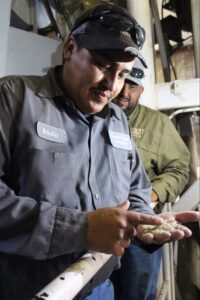
At Bamert, each seed lot is tested when it’s cleaned and re-tested every 5 months. That means we’re not just relying on the shelf — we know exactly what we’re shipping.
7. Can They Support Your Industry?
Different projects have different pressures.
Solar sites need pre-approval from environmental consultants. Oil & gas reclamation teams need fast establishment to pass inspection. DOT contractors need to match state specs exactly.
The right vendor understands the industry you’re in — and the stakes involved.
✅ Bamert Expertise
8. Do They Make Your Job Easier?
At the end of the day, you’re juggling dozens of tasks. Seed shouldn’t be the one that keeps you up at night.
A great seed vendor:
- Gives you confidence in the spec
- Delivers on time
- Flags what might go wrong
- Supports your success beyond the sale
✅ We’ve spent 75 years building a company that does exactly that.
Ready to Work With a Seed Vendor You Can Trust?
Send us your project location or spec. Get a custom blend shipped fast. Stay compliant and ahead of the curve.
Call 1-806-639-5232 or contact us online today. We’re here to make your project a success.