
Author - Bamert Seed

75 Years in the Field: What It Takes to Build a Native Seed Company That Lasts

Most seed companies don’t make it.

Even fewer make it 75 years — and stay family-run, production-based, and customer-focused all the way through.

In a world of quick wins and lowest-bid contracts, we built something different: a 75-year track record of doing right by both the land and the people who steward it.

Bamert Seed began as a small operation growing grass seed for others.

1951 – Founded by Carl Bamert in West Texas

1980s – Early CRP project involvement

Today – 1M+ lbs of seed shipped annually across the world

But the heart of the work hasn’t changed.

We’re still here to help you choose the right seed, for the right site, at the right time — and grow something that lasts.

A Legacy Rooted in Resilience

Our founder, Carl Bamert, was a cattleman. He started growing seed on the same land we work today.

When a customer couldn’t pay him, he took the product to market himself. 

That decision sparked a seed company built on quality, not shortcuts.

From those early days, we became known as a reliable source for native grasses used in conservation and compliance programs — including some of the first CRP projects in Texas.

As demand grew, so did our production. We scaled from just a few species to more than 115 native species and varieties, many of which we grow ourselves on our own fields.

Today, we don’t just sell seed. We partner with contractors, consultants, and landowners to help revegetation projects succeed — from highway corridors to habitat restorations.

One Constant: Adaptation

If there’s one constant in Bamert’s 75-year history, it’s change — and the willingness to adapt has shaped everything from the fields to the front office. 

As Rob shared in his interview, “You don’t survive and thrive this long without being adaptable.” 

Whether it was transitioning equipment to handle new cleaning techniques, evolving with tighter compliance demands, or responding to customer needs across new industries like solar and infrastructure, the team has never stayed static.

They’ve adjusted planting practices for weather extremes, redesigned production flow for custom blends, and built in systems that make fast, compliant shipping possible at scale. 

At Bamert, adaptation isn’t a buzzword — it’s muscle memory.

And for clients, that translates into a partner who won’t just keep up, but help you stay ahead.

The Value of 75 Years? Hard-Earned Expertise

Rob Cook, Director of Business Development

There’s no playbook for producing native seed.

Each species — and each variety — grows differently. Some need more time in the ground. 

Others need special equipment or cleaning techniques.

💡 “Each seed lot is different. Every harvest and cleaning run is different. That’s why the knowledge of our team is so important — and why we invest in keeping it.”

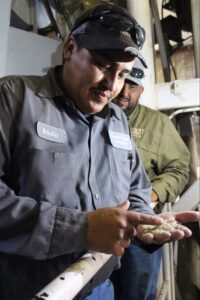
Our production team knows the difference, because they’ve lived it.

Boots on the Ground: Production That Performs Under Pressure

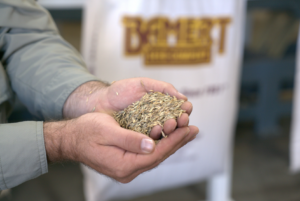
We farm and clean seed in-house, using equipment built to handle the quirks of native species. 

And we run our cleaning facilities 24/7 to ensure consistent, high-quality output — that allows us to perform for large orders with tight deadlines.

What we DON’T do in-house: Testing. We use third-party, licensed testing to ensure unbiased results and full transparency for every client. Because quality should be confirmed, not self-declared.

Education, Ownership & Passion

Behind every blend is a team that understands both the science and the stakes. 

If you’ve called us, you’ll know. Our sales and support staff aren’t generalists or order-takers — they’re trained in agronomy, ecology, wildlife, and restoration, with firsthand experience applying seed on real project sites.

That expertise shows up when specs don’t quite fit, when timelines shift, or when conditions on the ground don’t match what’s on paper. 

Just as important, our whole team operates with a true sense of ownership. 

Many have been with the company for years, carrying hard-earned knowledge forward and treating every project as if it were their own.

For clients, that means fewer handoffs, clearer answers, and recommendations built around long-term success — not quick transactions.

What That Means for You

It’s easy to assume seed is just another input. But for project success, seed performance is critical — and mistakes can be costly.

Choosing a vendor who doesn’t understand adaptation, species variability, or compliance standards? That leads to failed stands, inspections, and replanting.

Here’s what sets Bamert apart:

  • Our seed is adapted to the Southern Great Plains and surrounding regions.

  • Support when you build your own spec with SeedSpec, or let us handle it for you.

  • We don’t push inventory. We build what’s biologically appropriate and field-proven.

  • We get the spec right the first time, so PMs, engineers, and owners avoid delays.

  • Our team of ecologists, agronomists, and restoration experts — not just sales reps


And we’ve been doing it for 75 years.

A Texas-Sized Vision for the Future

In an average year, Bamert ships enough native seed to cover 200,000–400,000 acres — from Texas solar sites to roadside corridors to a project at a major airport in China.

And we’re not slowing down.

We’re focused on custom blends, ecological outcomes, and creating tools like Seed-Spec to support site-specific planning.

We’re building partnerships with restoration groups, large-scale contractors, and government agencies that need native seed they can trust.

The way we see it: The more success we can grow from the ground up, the more impact we can have — on the land and the people managing it.
Work With a Team That’s 75 Years in… and Still Growing Strong

Explore our custom native seed blends or reach out to get a quote for your next project.

Use the free Seed-Spec Tool or Contact Us today.

Share:

Facebook
Twitter
Pinterest
LinkedIn
On Key

Related Posts

Join Our Team

Step 1 of 3

Your Personal Information

Your Name
Your Email Address
Address
When is the best time for us to reach you via telephone?